Fantasy Forward Tiers Are a Betting Document, Not Just a Draft Cheat Sheet

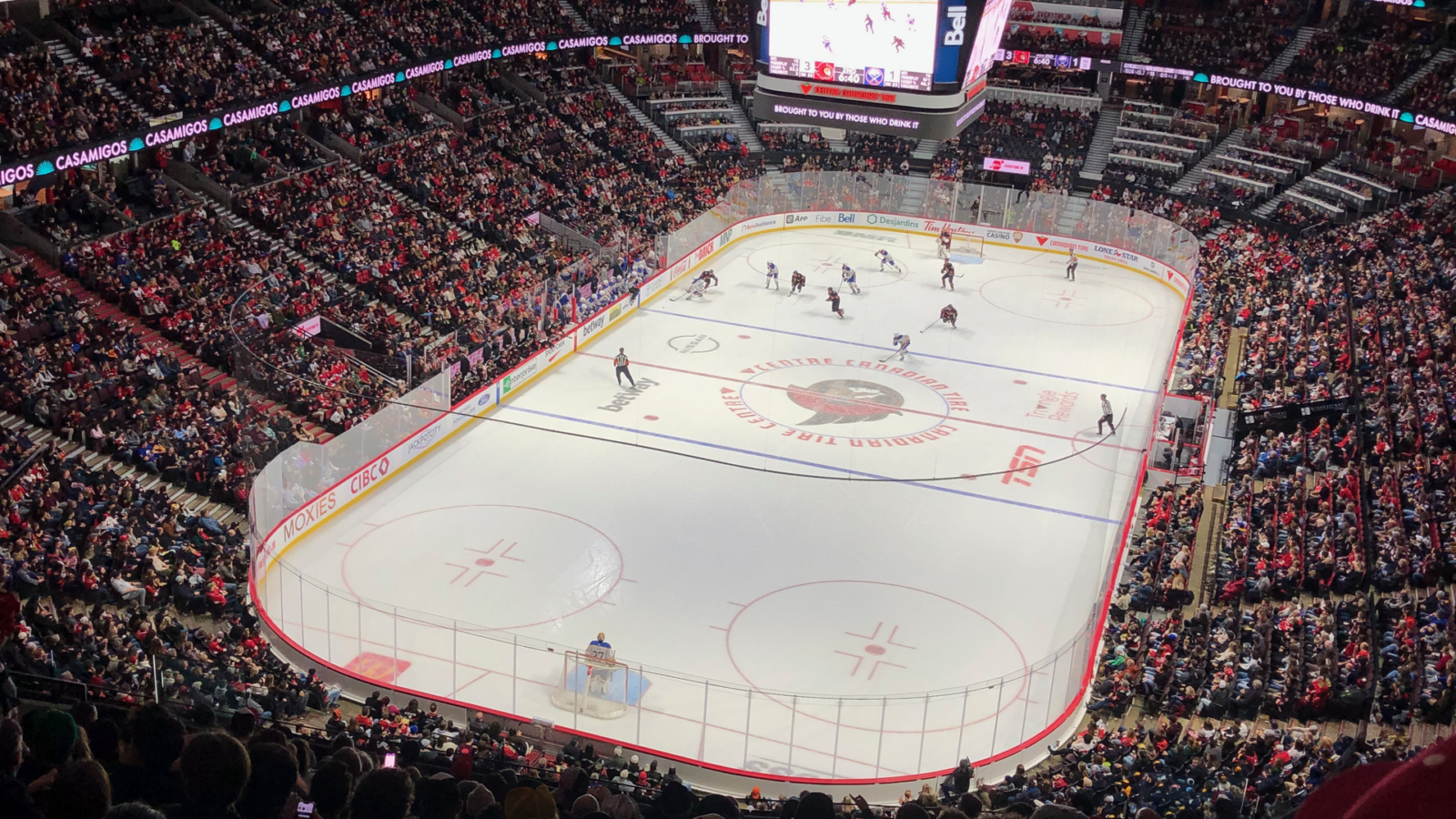
Photo by Safyrr — CC BY-SA 4.0 via Wikimedia Commons
Sean Allen’s tiered forward rankings are designed for fantasy drafts, but the sharper reader is the bettor. A published tier list is, functionally, a free consensus projection — and every NHL season point total, awards future and team scoring market you’ll see this fall is anchored to that same consensus. The actionable information isn’t who occupies the top tier. It’s where the tiers break, because that’s where pricing errors tend to live.
The Tier Break Is Where the Market Gets Lazy
The logic of tiering is statistical: within a tier, projected outcomes are roughly interchangeable, while the gap between tiers represents a genuine cliff in expected production. Drafters use this to decide when to reach. Bettors should use it to interrogate season-long props once they’re posted.

The edge sits at the seams. A player listed at the bottom of a tier has a projection meaningfully closer to the group below him than to the names above him — that profile historically leans under against a market number set by reputation rather than current trajectory. The inverse holds at the top of a lower tier, where a riser often gets priced like the tier he’s leaving rather than the one he’s entering. Books shade toward consensus because recreational money follows name value, and tier lists reinforce that anchoring. You don’t beat the market by arguing about Connor McDavid. You beat it at the boundaries, where the consensus is softest.
Scoring Futures Are Priced Off the Top Tier
Awards markets behave differently than props, and tiers clarify why. The Art Ross and Rocket Richard races are effectively closed shops — winners come almost exclusively from the elite cluster every season. That means long-shot exposure in those markets is usually a tax on impatience, not a value play. The disciplined approach is to restrict exposure to the top tier and then demand a deployment edge: power-play role security, line-combination stability, and a clean health profile. Two players can sit in the same tier with very different path dependency, and that difference is what futures pricing tends to flatten.
Goal-scoring markets deserve a separate note. Goals carry far more year-to-year variance than points because shooting percentage is noisy even for elite finishers. A winger whose tier placement rests on an unsustainable conversion rate is a regression candidate the moment the season starts, and that’s relevant both for goal props and for any futures ticket built on him repeating a career year.
One underrated application: team scoring leader markets. When two forwards on the same roster land in the same tier, the implied probability split in that market often doesn’t reflect genuine ambiguity. Tier lists expose depth charts where the favourite is a coin flip wearing a favourite’s price.
The Regression Flags Hiding Between the Tiers
The correct way to read a tier drop isn’t as an insult — it’s a diagnostic prompt. When a forward slides a tier, ask why. The usual suspects are measurable: a shooting percentage that ran well above career baseline, a heavy share of production coming on the power play with a new unit or coach in place, age past the typical forward peak, or a linemate downgrade. Each of those is a quantifiable drag on projection, and each maps directly to a betting position — most often an under on a number the market hasn’t fully adjusted.
The reverse flags matter just as much. A player climbing tiers on the back of a linemate upgrade or a move to a top power-play unit is a candidate to be underpriced in October, because early-season markets lean on last year’s totals. Training camp deployment reports — who skates together, who runs the first unit — are confirmation data for exactly these boundary cases.
Turning the Cheat Sheet Into a Checklist
The process is simple enough to execute before the puck drops. First, log the tier breaks now, while the analysis is fresh. Second, when season point totals post, flag every number that implies a different tier than the consensus placement — those mismatches are your watchlist. Third, track preseason deployment for every flagged name. Fourth, in awards markets, stay inside the top tier and insist on a structural edge rather than a hunch.
Allen’s tiers are free. The edge isn’t in the document — it’s in reading it as a probability distribution instead of a ranking, and betting the places where the market didn’t.
Reporting source: Fantasy hockey forward tiers: Who to draft and when to take them