Macdonald’s ‘Most Difficult Stretch’ Admission Is a Handicapping Lesson, Not a Human Interest Story

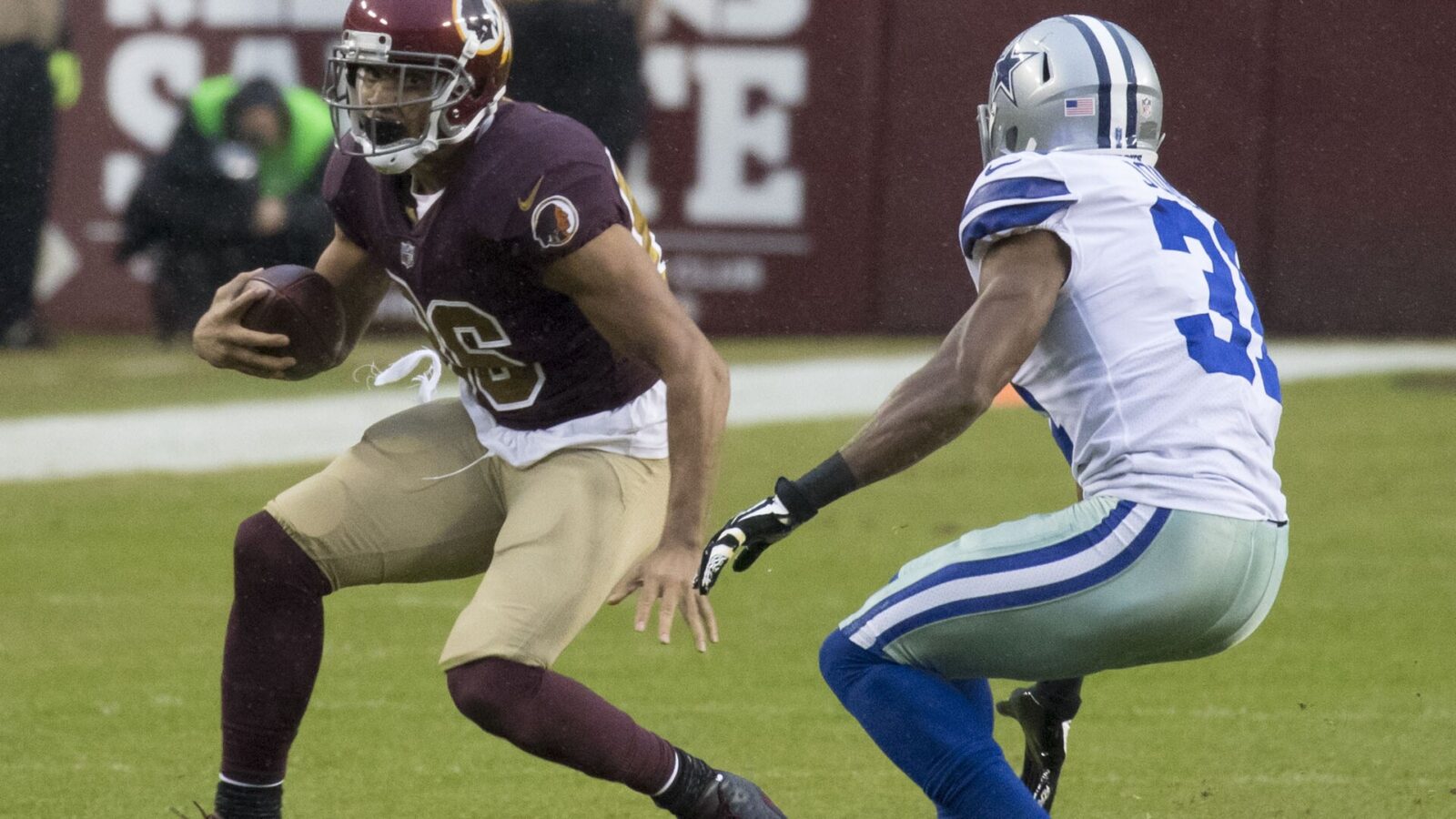
Photo by Keith Allison — CC BY-SA 2.0 via Wikimedia Commons
Mike Macdonald’s recent sit-down on “In Depth With Graham Bensinger” will get filed under feel-good sports content: a young coach opens up about the personal toll of his first months running the Seattle Seahawks, calls it the “most difficult stretch of my life,” and everyone moves on. If you bet on the NFL, you shouldn’t move on. You should treat this as a case study in the single most underpriced variable in football markets: the psychological state of the man making fourth-down decisions.
Coaching is the largest non-player input in any NFL outcome, and it is the one the betting market is worst at quantifying. Books can price a quarterback’s sprained ankle within minutes. They cannot price whether a head coach’s family has adjusted to a cross-country move, whether he’s sleeping, or whether the weight of a first-time CEO role is bleeding into his game management. Macdonald just confirmed, publicly, that all of that was real. Sharp bettors should have already assumed it.

The Rookie Coach Variance Problem
Go back and look at what Macdonald’s debut season actually looked like from a betting perspective. Seattle opened hot, stumbled badly through the middle of the schedule, then rallied late to finish 10-7 and miss the postseason on tiebreakers. That arc is textbook first-year head coach variance: early success built on schematic novelty, a midseason correction once opponents had film, and a late surge once the coach adjusted back and his systems took hold.
Bettors who understood that pattern had edges on both sides of it — backing Seattle early when the market undervalued Macdonald’s defensive scheme, fading them when the inevitable adjustment period hit, and buying back in when the price had overcorrected. The personal struggles Macdonald described in the interview aren’t separate from that on-field arc. They’re the explanation for it. A coach fighting fires off the field is a coach whose preparation bandwidth is compromised on it.
Why the Timing of This Admission Matters
Context is everything when a coach shows vulnerability. A first-year coach melting down at press conferences in November is a live fade signal. A coach in his third season calmly reflecting on a crisis he survived is the opposite — it’s evidence of processing, growth, and organizational stability. Macdonald is now entrenched in Seattle. The storm he’s describing is in the rearview mirror, and the willingness to discuss it openly suggests a level of self-awareness that historically correlates with strong in-game adjustment ability.
That’s a meaningful input for how you should frame the Seahawks. Coaches who have been through the fire and come out the other side tend to have higher floors. Their staffs are settled, their culture is installed, and their decision-making under pressure has been stress-tested. When you’re evaluating Seattle against the number week to week, or considering them in futures markets, coaching stability should be a point in their favor — not a question mark.
The Tactical Takeaways
There are broader lessons here that apply well beyond the Pacific Northwest. First, any time a team hires a first-time head coach, you should widen your uncertainty ranges for that team’s first six to eight games. Reduce position sizes. Demand better prices. The adjustment curve Macdonald described is not unique to him — it’s the norm, and the market consistently underweights it in September.
Second, build the human element into your process deliberately. Reporting like this interview is available to everyone, but almost nobody converts it into handicapping action. Coaching changes, staff upheaval, personal adversity, front-office friction — these are soft signals that models ignore and disciplined bettors can exploit. You don’t need inside information. You need to take public information seriously when it points at the coaching chair.
Third, learn to distinguish between distress signals and recovery signals. Real-time chaos — a coach snapping at reporters, scapegoating coordinators midseason, making erratic challenge and clock decisions — is a reason to fade. Retrospective honesty about past struggles is a reason to trust. Macdonald’s interview is firmly the latter.
The market can’t price a man’s interior life, and it doesn’t have to. Your job is simply to recognize when that interior life is about to show up in a fourth-and-short decision — and to be positioned before everyone else figures it out.
Reporting source: Macdonald: Seahawks start was 'most difficult stretch of my life'