Fever’s Playoff Exit Is a Repricing Event, Not a Verdict

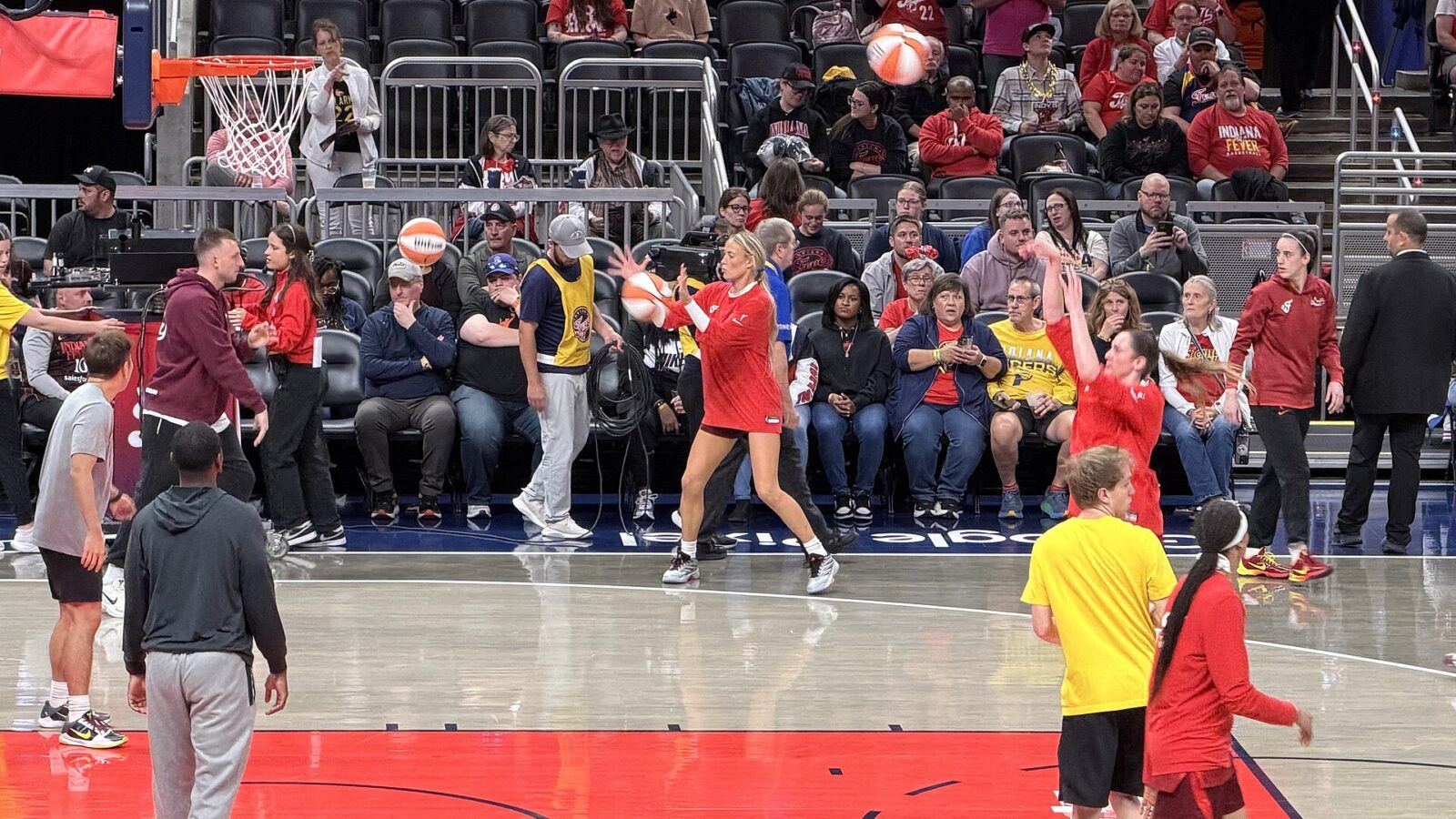
Photo by Missvain — CC0 via Wikimedia Commons
Indiana’s 94-83 elimination loss to Las Vegas on Thursday will be processed by most observers as another data point in a young team’s education. Bettors should process it differently. Playoff exits reset how sportsbooks and the betting public price a franchise for the following twelve months, and no team in the WNBA carries more public money per game than the Caitlin Clark-led Fever. That repricing cycle — not the eleven-point margin — is where the actionable information sits.
The Clark Tax Just Got Cheaper
The Fever have been the league’s premier public team since Clark arrived as the No. 1 overall pick in 2024, and public teams carry a structural cost. When casual handle concentrates on one side, books shade prices toward that side, and the bettor backing Indiana has effectively paid a premium on spreads, futures and awards markets for two seasons running. That premium is demand-driven, not performance-driven.

Elimination losses — particularly decisive, nationally visible ones — historically deflate that demand. The casual bettor who backed the Fever on emotion disengages in October and doesn’t re-engage until the following spring’s hype cycle. In that window, the shading on Indiana softens and prices drift toward something closer to the team’s true probability. For disciplined bettors, the months between a deflating exit and the first wave of preseason optimism have consistently been the most efficient entry point on hype-driven teams across every major league. The WNBA is no exception.
What Playoff Losses Actually Predict About Young Cores
The opponent matters for context. Las Vegas has been the league’s standard for the better part of a decade, a franchise that absorbed its own postseason failures before converting them into championships. That arc is the relevant historical pattern here: elite young talent paired with a stable supporting core tends to convert playoff repetitions into measurable regular-season efficiency gains within a season or two. The experience variable is real, even if it’s routinely overstated in coverage and understated in models.
Indiana’s structural profile supports the optimistic reading. Clark, Aliyah Boston and Kelsey Mitchell give the Fever a continuity foundation that most young teams lack, and continuity is one of the few offseason variables with demonstrated predictive value. Teams returning their high-usage core tend to show less year-over-year variance and more reliable early-season performance than rosters in flux. A group that has now logged meaningful playoff minutes together enters next season with a smaller error bar around its projection — and smaller error bars are exactly what bettors want when evaluating futures.
The Offseason Inputs That Will Move the Numbers
The loss itself tells us less than the front office’s response to it. The variables worth tracking between now and next spring, in rough order of market impact:
Roster aggression. A team that loses an elimination game by double digits has identified gaps, and how Indiana addresses depth and defensive consistency in free agency will shift win-total openers more than any narrative about experience. Aggressive moves signal internal win-now expectations, and books price those signals quickly.
Health and availability. A full offseason for a young core is a development multiplier. Clark’s year-over-year trajectory has been steep by any historical standard, and another uninterrupted training cycle is the kind of input that projection models handle well and public perception handles poorly.
Coaching and system stability. Continuity on the bench compounds continuity on the floor. Any disruption there raises variance; stability lowers it.
The Betting Framework From Here
No numbers are posted yet, so this is a process conversation rather than a picks conversation — which is precisely the point. The edges on Indiana next season will be created now and captured later:
Futures timing. The value window on the Fever typically opens in the post-elimination pessimism stretch and closes once preseason coverage reactivates the public. Early positions on a team with this profile have historically outperformed positions taken in the preseason rush.
Win totals. Public teams frequently open with inflated totals that drift as sharper money evaluates the roster. Patience on the total, aggression on the long-term position, has been the correct sequencing with high-handle teams.
Clark’s individual markets. Awards pricing on young superstars tends to lag development curves, and a player with Clark’s usage and trajectory entering her prime-age seasons is the exact profile that historical award markets have undervalued.
The clinical read on 94-83: one elimination game against the league’s gold standard is a small sample with a large narrative attached. The Fever’s underlying trajectory — elite young superstar, returning core, accumulating playoff reps — is the profile that has historically outperformed market expectation in the following season, particularly once the public premium deflates. The loss costs Indiana a banner run. It may hand bettors a price.
Reporting source: Fever seek to build on playoff experience after loss to Aces