Valkyries One Win From History — and One Game From a Classic Betting Trap

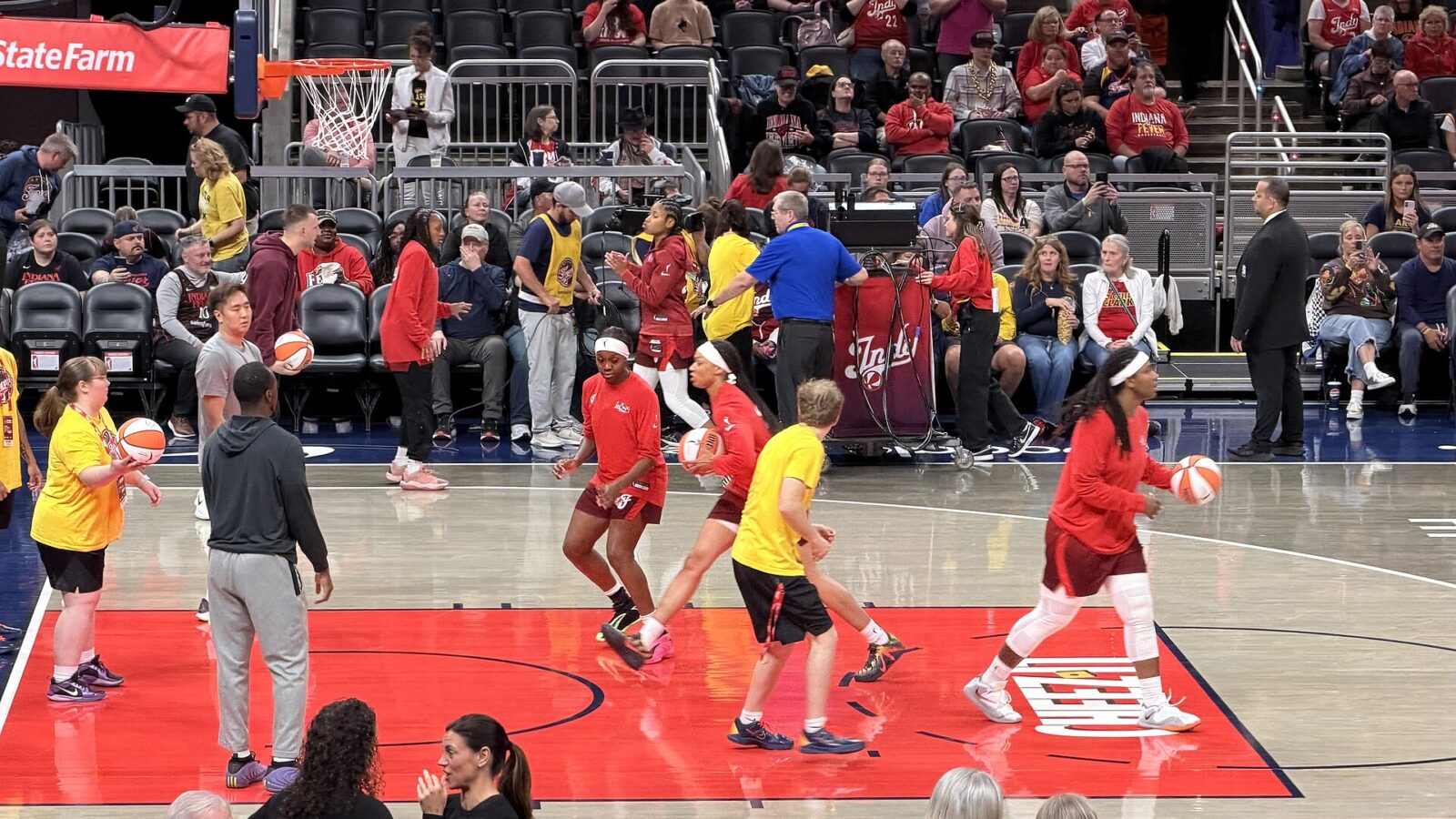
Photo by Missvain — CC0 via Wikimedia Commons
Closeout games are the most mispriced contests in any playoff series, and that — not the confetti, not the storyline — is why this one matters to your bankroll. When the Golden State Valkyries take the floor in Atlanta with a chance to finish the WNBA Finals, the market won’t simply be pricing two basketball teams. It will be pricing narrative, emotion, and a desperation premium that recreational money consistently misreads. If you’re betting this game, your edge won’t come from deciding who “wants it more.” It will come from understanding how elimination spots mechanically change rotation behavior, minute distribution, and risk tolerance — and refusing to pay a tax for a storyline.
If you already hold a series position on Golden State, this game is a hedge decision point. If you’re attacking it as a standalone wager, you need to treat it as a structurally different animal from Games 1 through however-many we’ve seen so far.

The Expansion Outlier Problem
Here’s the analytical wrinkle that makes this series genuinely difficult to model: the Valkyries are a second-year franchise. Every projection system in sport is built on priors — championship pedigree, Finals experience, historical closeout performance. Golden State has none of that. There is no archival data on how this organization handles a trophy on the line, because the organization barely exists.
That cuts in both directions. There is no evidence of Finals composure, but there is also no evidence of Finals fragility. What you should resist is any confident take about how a young franchise “handles the moment.” That is unfalsifiable noise dressed up as analysis. When the sample size is zero, the correct move is to widen your error bars — not to invent a personality for a roster and bet on it.
Read the Standings, Not the Storylines
The raw records contain a genuinely useful split that most previews will gloss over. Golden State went 32-12 overall but just 15-8 within the Western Conference — which means the Valkyries were a staggering 17-4 against the East. Atlanta, at 30-14 overall and 15-5 in the East, was actually the more dominant in-conference team by winning percentage but went only 15-9 across conferences.
Why does that matter? Because Golden State’s overall record advantage isn’t soft. It was built directly against Eastern Conference opposition — the same stylistic pool Atlanta comes from. The “better team on paper” case is supported by cross-conference dominance, which is more transferable to this matchup than in-conference records that were compiled against largely irrelevant opponents.
The caveat, and it’s a real one: aggregate season splits don’t capture matchup-specific dynamics, current availability, or October form. Treat the 17-4 figure as a baseline indicator of quality, not a predictive lock. It’s a prior, not a conclusion.
The Desperation Tax in Closeout Games
The most reliable, measurable pattern in elimination games has nothing to do with emotion. It’s rotation tightening. Coaches facing elimination shorten benches and extend starter minutes — it’s one of the few postseason tendencies that shows up in the data year after year, because it’s a rational, deliberate decision rather than a psychological one.
For this game, the practical implication is straightforward: expect Atlanta’s best five or six players on the floor for heavier minutes than you’ve seen earlier in the series. If Golden State has been exploiting second-unit mismatches — and deep benches are typically how you win road games in a long series — that edge compresses tonight. Before you bet anything, pull the minute distributions from the earlier games in this series and compare them to what you’d project for an Atlanta elimination spot. That gap is where the real handicap lives.
As for the emotional framing — that the trailing team plays desperate and loose while the leader tightens up — the clinical view is that effort is real but small, and largely captured by the rotation effect above. Don’t pay for it twice.
A Framework for Betting the Clincher
With no lines in hand, the disciplined approach is structural. First, check internal consistency: whatever single-game price eventually posts should be coherent with the series market. If the series price implies one thing about Golden State’s per-game win probability and the moneyline implies another, one of them is wrong, and that disagreement is your opportunity.
Second, build your live-betting plan before tip. Closeout games produce exaggerated in-game swings — the trailing team fronts maximum early intensity, which creates inflated deficits and inflated comebacks. Predefine your entry points now, while you’re calm, rather than chasing a number mid-run.
Third, weight the highest-information inputs: confirmed availability, minutes trends, and pace. Everything else — destiny, heart, momentum — is marketing.
The data supports Golden State as the better team across a full season. But road closeouts compress edges by design. Bet the structure, not the story.
Reporting source: Valkyries look to clinch WNBA Finals against Atlanta