McIlroy Two Back at Wentworth: Separating Signal From Noise Before the Final Round

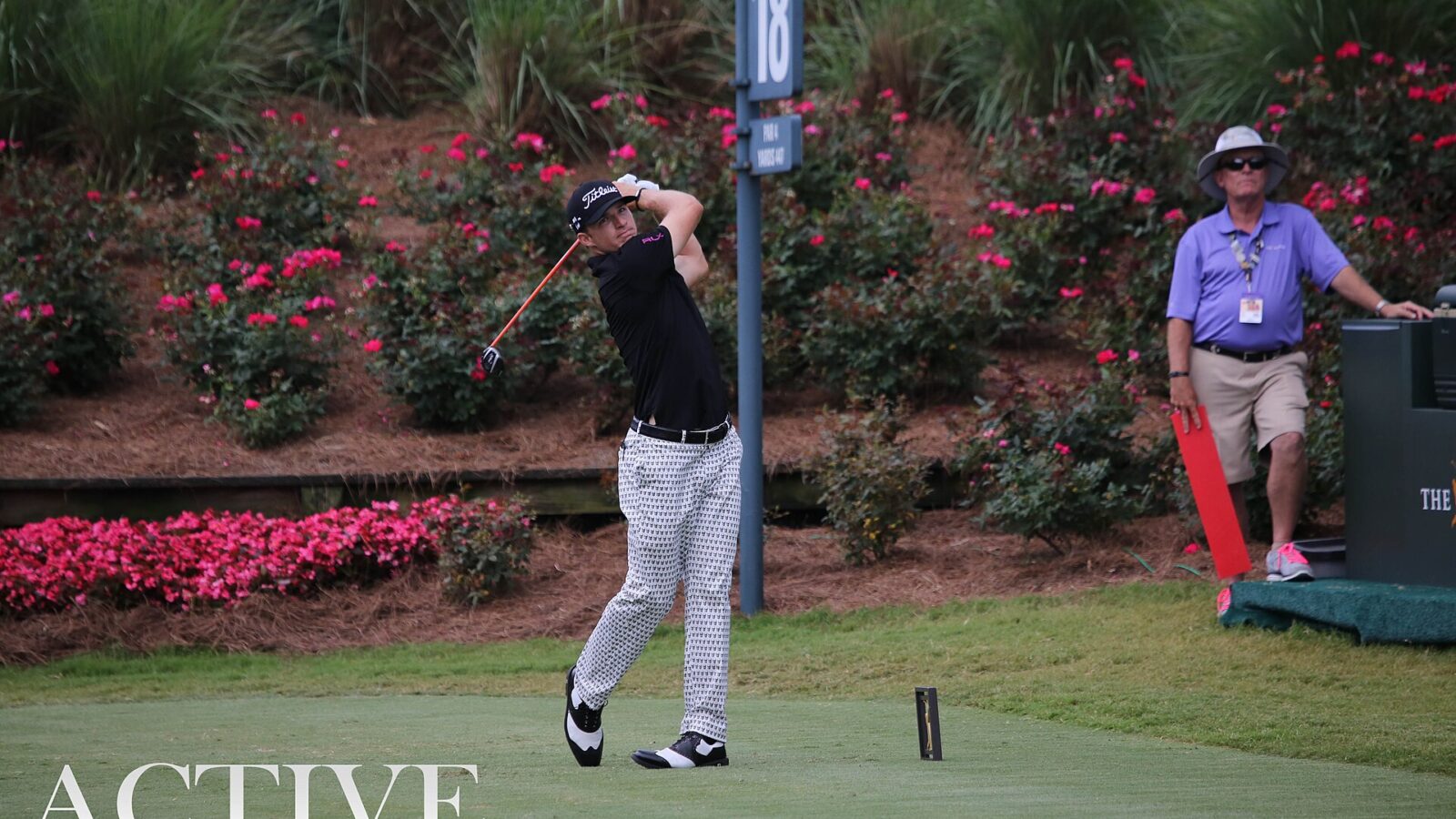
Photo by Active Magazine — CC BY 2.0 via Wikimedia Commons
Overnight markets for the BMW PGA Championship will reprice on the back of one sequence: Rory McIlroy’s birdie-eagle finish on Saturday, which dragged him within two shots of leader Manuel Elvira heading into Sunday. For anyone holding a ticket or considering one, the question is not whether the finish was dramatic — it clearly was — but whether it changes McIlroy’s true probability of winning. The analytical answer is that it changes it far less than the highlight reel implies, while the two-shot deficit itself is more surmountable than casual money tends to assume. Both points matter before you commit a unit in either direction.
The Birdie-Eagle Finish Is a Story, Not a Statistic
Round-to-round scoring correlation in elite professional golf is weak. This is one of the most robust findings in the sport’s analytical literature, and it cuts directly against the momentum narrative that saturates post-round coverage. A player who closes birdie-eagle on Saturday has demonstrated what happened over two holes, not what will happen over the next eighteen. The expected regression on Sunday is toward his baseline scoring level, and McIlroy’s baseline is already elite — which is the actual reason to rate his chances highly, not the closing kick.

There is also a structural point worth noting. Wentworth’s closing hole is a par-5 designed to be reachable, and eagle opportunities there are part of the course’s normal variance, not evidence of supernatural form. If McIlroy’s third round was underpinned by strong approach play and controlled driving across the full eighteen, that is genuinely informative. If the round was salvaged by two holes of fireworks, the finish is decoration. Bettors pricing Sunday off the highlight are paying a momentum tax that the data does not support.
Course History Is the Strongest Number on McIlroy’s Card
Where the signal does exist is in venue fit, one of the few stable predictive variables in golf. McIlroy’s Wentworth résumé is extensive: champion in 2014, beaten by a single shot by Shane Lowry in the 2022 edition, and a playoff loser to Billy Horschel in 2024. Repeated contention at the same course across more than a decade is not coincidence. It reflects a persistent match between his profile — elite driving distance, high ball flight, aggressive par-5 scoring — and what the West Course demands. That body of work should anchor any estimate of his Sunday win equity.
The course also matters for how you think about the deficit. A two-shot gap at Wentworth is thin by historical standards, and the reachable par-5 finisher means leads can compress or flip on a single swing late in the round. For live-betting purposes, that hole functions as a volatility engine: no leader at Wentworth is ever fully safe until the final putt drops, which has implications for anyone looking to lay a frontrunner in-running.
The Other Side: Elvira, Celli and the Weight of the Lead
The counterweight in this analysis is the identity of the men McIlroy is chasing. Manuel Elvira holds the lead, with Filippo Celli among the names in the chasing pack, and neither carries a conversion record at flagship-level events comparable to McIlroy’s. The historical pattern across professional golf is consistent: lightly credentialed 54-hole leaders convert at meaningfully lower rates than established winners in equivalent positions, particularly when paired with or stalked by a proven closer. Sunday pressure at a flagship event is a different physiological and tactical environment, and it tends to expose players experiencing it for the first time.
That said, discipline requires acknowledging the other side of the variance. Elvira has the strokes in hand, and eighteen holes is a small enough sample that the best player does not win anything like as often as intuition suggests. Fading the leader purely because McIlroy is behind him is a narrative bet dressed up as analysis. The correct frame is measuring the gap between price and probability on both sides of the market.
A Disciplined Framework for Sunday
Without official numbers in front of us, the sensible approach is a checklist rather than a pick. First, estimate win equity from position and course fit, not from Saturday’s final two holes — a two-shot deficit with eighteen to play falls well within the normal comeback range at this level. Second, count the bodies: every player between McIlroy and the lead is an additional outcome that must break his way. Third, consider alternative exposure if the outright price on McIlroy has been compressed by public money chasing the birdie-eagle story — final-round matchups and place markets often carry less narrative inflation than the win market on a marquee name.
Finally, check conditions before locking anything in. Wentworth’s scoring environment swings meaningfully with wind and green firmness, and tee-time splits have historically mattered on Sunday there. The bottom line is straightforward: bet McIlroy’s decade of Wentworth evidence and elite baseline if the price allows it, not two holes of theater. The highlight is free. The value is elsewhere.
Reporting source: Rory McIlroy 2 shots back of BMW PGA Championship lead