Wyndham Clark’s ‘Dead Crowd’ Remark Is a Betting Signal Hiding in Plain Sight

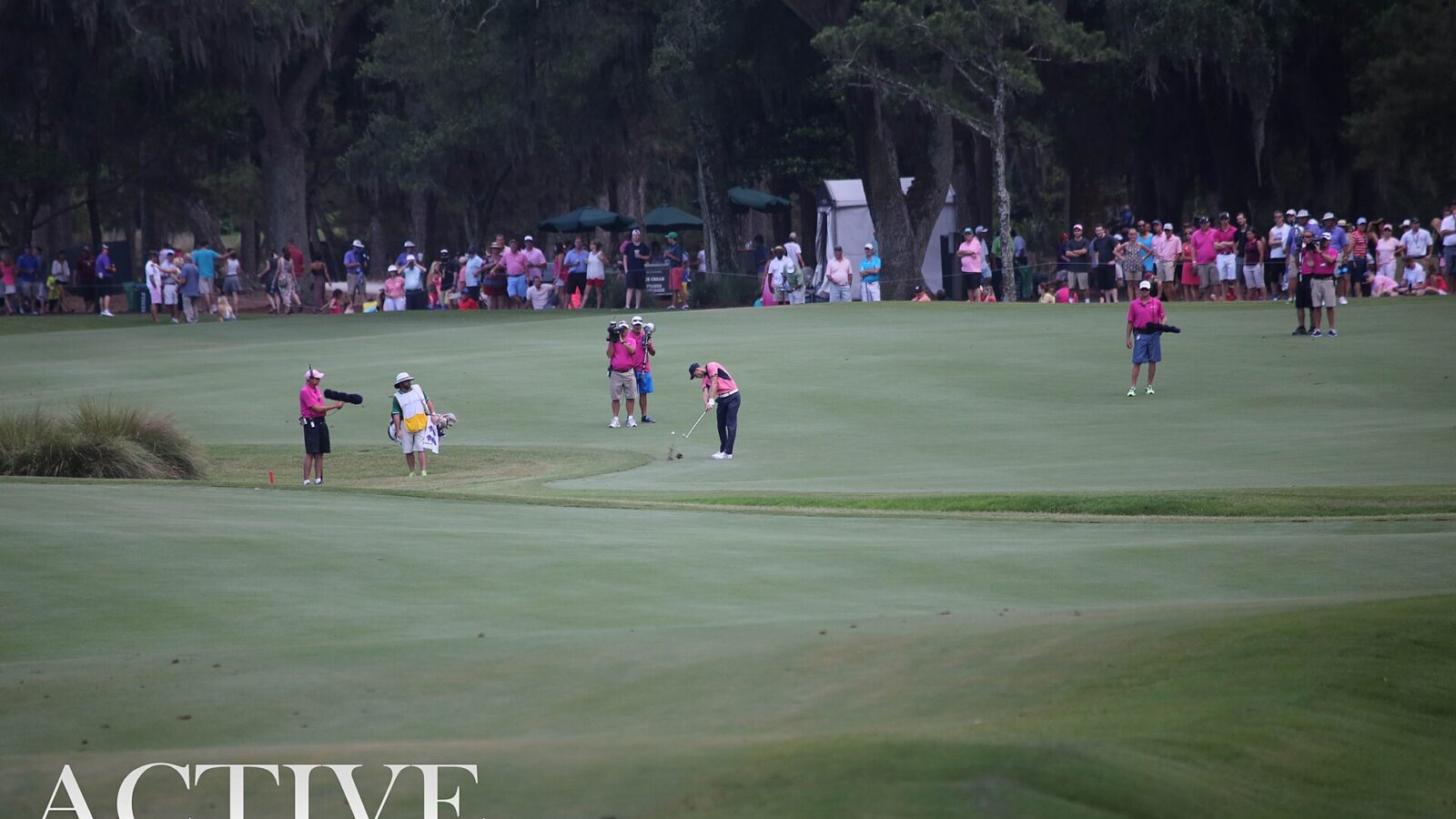
Photo by Active Magazine — CC BY 2.0 via Wikimedia Commons
Most golf headlines are noise for bettors. This one isn’t. When a U.S. team member stands up after day one of the Presidents Cup and publicly calls the home atmosphere “kind of dead,” he has just handed the betting market a piece of actionable information about one of the few environmental variables that genuinely moves match-play outcomes. Crowd energy is not a storyline. In team golf, it is a measurable input — and Clark just told you it was below baseline at Medinah on Thursday.
The instinct is to file this under “player complains about fans” and move on. That would be a mistake. The Presidents Cup is not a 72-hole stroke-play event where variance regresses over four days. It is a series of 18-hole sprints where momentum, emotion and external stimulus carry outsized weight. If you are pricing these matches as if they were individual stroke-play form exercises, you are modeling the wrong sport.

Home Crowds Are the Strongest Edge in Team Golf
The historical record here is about as clean as sports data gets. Recent Ryder Cups have been defined by lopsided home victories — Paris in 2018, Whistling Straits in 2021, Rome in 2023 — and Medinah itself produced the most famous crowd-fueled momentum swing in modern team golf history when Europe stormed back on Sunday in 2012. The Presidents Cup has been more one-sided on paper, with the U.S. losing just once in the event’s history, but session-level results within that dominance consistently track with which side controls the emotional temperature of the venue.
The mechanism is straightforward. In an 18-hole match, a single roar from a nearby green, a halved hole in front of an energized gallery, or a momentum-shifting putt can cascade. Players are not robots; their aggression on putts and approach shots responds to environment. A subdued crowd compresses the home team’s edge. That is precisely what Clark was describing — and precisely what should concern anyone backing the U.S. at short prices on the assumption that home soil is an automatic advantage.
What Clark’s Comments Actually Reveal
Strip away the provocation and there are two data points embedded in Clark’s remarks. First, the U.S. room noticed the flat atmosphere and cared enough to address it publicly within hours of play ending. That tells you this is a team that expects — and perhaps needs — external energy. Clark himself is one of the more emotionally expressive American players; his performance profile in team environments is the type that plausibly correlates with crowd engagement. A player publicly invested in atmosphere is a player whose output may be environment-sensitive.
Second, this was almost certainly strategic. You do not challenge the gallery on Thursday night unless you want a different building on Friday. Expect the weekend crowds at Medinah to arrive louder and more engaged than they otherwise would have been. Early sessions at team events are historically the flattest — corporate hospitality crowds, morning tee times, uncertain scoreboards — and they tend to build regardless. Clark just accelerated that curve.
How to Adjust Your Presidents Cup Approach
The practical read-through cuts in several directions. Do not overrate Thursday’s flat environment when projecting forward; the conditions that produced it are unlikely to persist, and Clark’s comments virtually guarantee a response from the galleries. If anything, the team-session markets may now underprice U.S. energy in the middle sessions, when the crowd effect typically peaks before Sunday singles dilute it across twelve simultaneous matches.
For live bettors, crowd noise is a genuine informational edge in team golf — roars travel before data feeds update, and swings in audible energy often precede scoreboard movement. A re-engaged Medinah crowd makes that signal louder and more reliable for the remainder of the week. Conversely, the clearest path for the International side has always been scoreboard pressure: nothing silences a home gallery faster than a deficit, and if the visitors stack points early in sessions, the home-crowd variable Clark complained about effectively disappears from the model.
The broader lesson is methodological. Markets tend to price home advantage as a fixed constant. Clark just demonstrated it is a dynamic variable — one that was below par on Thursday and is now likely to spike. Bettors who treat atmosphere as an input rather than a narrative will be ahead of that adjustment.
Clark framed his comments as a challenge to the fans. Read them instead as a scouting report on the conditions. That is what they actually are.
Reporting source: Wyndham Clark: Presidents Cup atmosphere felt 'kind of dead'